
13 November 2026 | By Admin
Overview
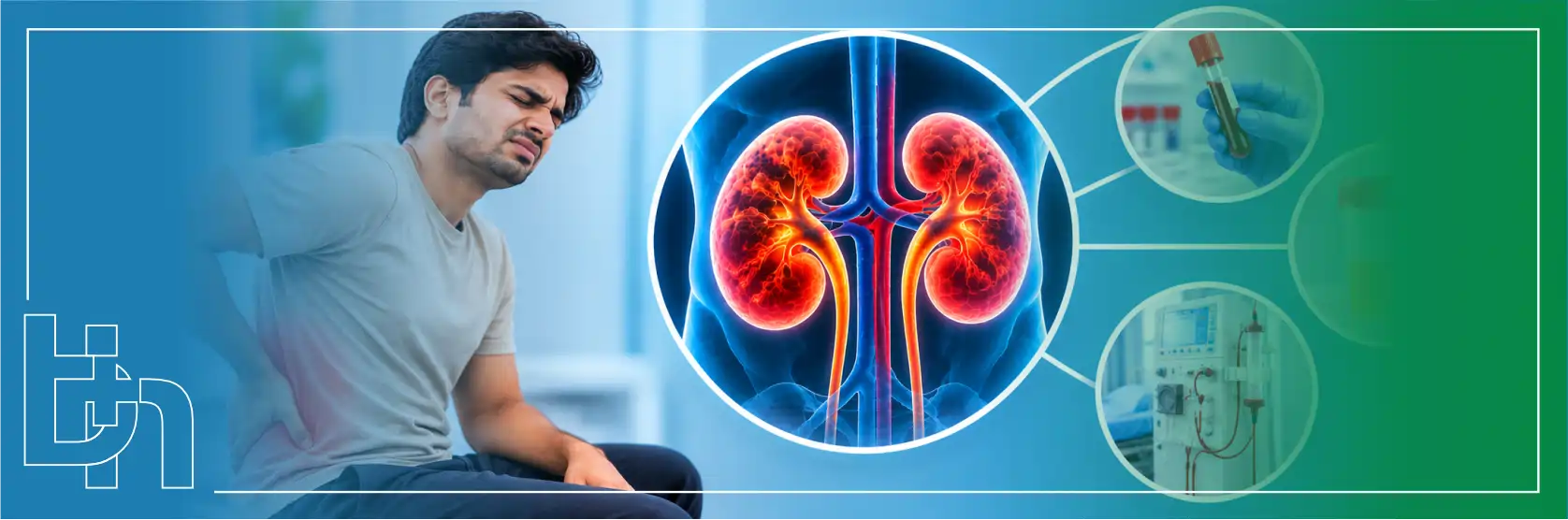
The kidneys filter waste from the blood, balance water and salts, and help control blood pressure. Acute kidney injury (AKI), often called sudden kidney failure, is a rapid drop in this filtering ability over hours or days. Unlike chronic kidney disease, which develops slowly over years, AKI can often be reversed if the cause is found and treated quickly. Early acute kidney injury treatment in Mumbai and elsewhere depends on recognising the signs before waste and fluid build up dangerously.
What Is Acute Kidney Injury?
AKI is usually diagnosed from blood tests and urine output. Doctors define it as a rise in creatinine of at least 0.3 mg/dL within 48 hours, a rise to 1.5 times the baseline within a week, or a marked fall in urine output. Creatinine is a waste product from muscle, and it climbs when the kidneys are not clearing it well.
Causes and Risk Factors
AKI usually falls into three groups.
People with diabetes, high blood pressure, existing kidney disease, or older age are at higher risk.
Symptoms
What Creatinine Level Requires Emergency Kidney Treatment?
There is no single number that applies to everyone. A normal creatinine for most adults is roughly 0.6 to 1.3 mg/dL, depending on the lab, age and muscle mass. What matters is how fast it is rising and what else is happening. A quick rise, even from a normal level, is concerning, and so is a high value with falling urine output. Emergency treatment is usually needed when creatinine is climbing along with dangerously high potassium, fluid in the lungs, acid build-up in the blood, or confusion. Do not judge by the number alone, and let a doctor interpret it with your other results.
How Is It Diagnosed?
Blood tests measure creatinine, urea and electrolytes such as potassium. A urine test looks for blood, protein and infection. An ultrasound checks the kidney size and looks for blockage. Doctors also track urine output carefully, and may order blood gas tests or further investigations to find the cause.
Treatment and When Dialysis May Be Needed
The main step is treating the cause: replacing fluids when dehydrated, stopping harmful medicines, treating infection and removing any blockage. Doctors also manage potassium, correct acid levels and balance fluids.
Dialysis takes over the kidney's job temporarily. It may be needed for dangerously high potassium that does not respond to medicines, fluid overload causing breathlessness, severe acid build-up, or symptoms from waste products such as confusion. When searching for a dialysis hospital in Mumbai, look for one where a nephrologist, an ICU and emergency care work together, since AKI patients are often seriously ill. Dialysis in AKI is often short term, and many people recover enough kidney function to stop.
Where Can I Get Emergency Kidney Care in Mumbai?
Choose a hospital with a nephrology team, 24x7 emergency services and ICU support. Bhatia Hospital in Tardeo, South Mumbai, has a nephrology department alongside its 24x7 emergency and ICU services. Bring recent reports and a list of medicines, including painkillers and herbal products.
Prevention and Recovery
Conclusion
Sudden kidney failure moves fast, but it is often reversible when caught early. Watching urine output, swelling and breathlessness, and getting creatinine and potassium tested immediately can protect the kidneys. If you are looking for the best nephrologist in Mumbai, pick a team that can manage both the cause and complications. The nephrology and emergency teams at Bhatia Hospital can assess kidney concerns around the clock.
FAQs
1. Is AKI the same as chronic kidney disease?
No. AKI is sudden and often reversible, while chronic kidney disease progresses slowly over months or years.
2. Can kidneys fully recover after AKI?
Many do, especially when the cause is treated early. Some people are left with reduced function and need follow-up.
3. Can common painkillers damage the kidneys?
Yes, particularly with regular use, dehydration or existing kidney problems. Ask your doctor before taking them.
4. Can urine output be normal in AKI?
Yes. Some people keep passing urine even though their kidneys are failing, so blood tests are essential.
5. Will every AKI patient need dialysis?
No. Most are treated without it. Dialysis is reserved for specific complications.
6. Does drinking more water prevent AKI?
It helps in dehydration, but it will not prevent AKI caused by infection, toxins or blockage. Excess water can be harmful if the kidneys are failing.
7. How long does recovery take?
It varies from days to weeks. Follow-up blood tests show whether function has returned.