
20 October 2026 | By Admin
Stroke is often thought of as a disease of grandparents. Yet doctors now see it in people in their 20s, 30s, and 40s. Because nobody expects it at that age, the symptoms get put down to stress, tiredness, or a bad migraine, and precious time is lost. Fast recognition and access to stroke treatment in Mumbai can change how well a person recovers.
What Happens Inside the Brain During a Stroke
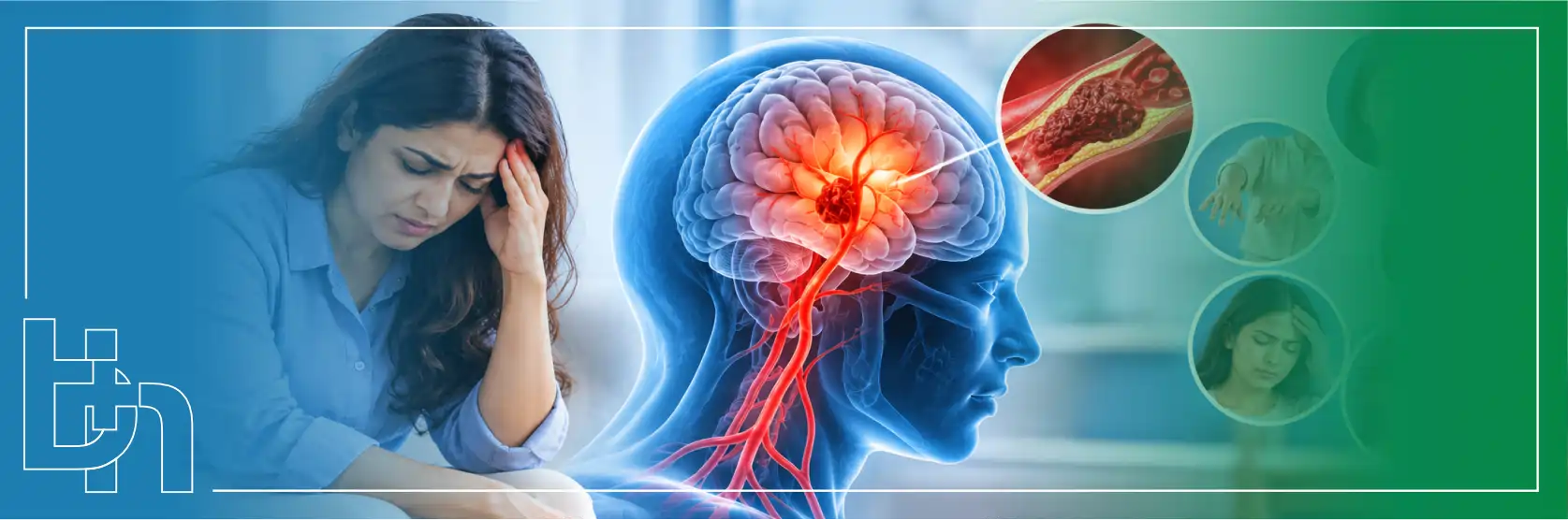
The brain needs a constant supply of blood. A stroke occurs when that supply is cut off, or when a blood vessel in the brain bursts. Brain cells begin to die within minutes without oxygen.
There are two main types. An ischaemic stroke, the more common one, is caused by a blocked artery. A haemorrhagic stroke is caused by bleeding in or around the brain. A transient ischaemic attack (TIA), sometimes called a mini-stroke, causes temporary symptoms but is a serious warning that a full stroke may follow.
Why Strokes Are Appearing at a Younger Age
In young adults, several causes come up again and again:
The BE FAST Checklist
Many people ask, what are the BE FAST warning signs of stroke? The letters are easy to remember and worth teaching to your family:
Note down the time the symptoms began. Treatment decisions depend on it.
Warning Signs Beyond BE FAST
Not every stroke follows the checklist. A sudden, severe headache unlike any you have had, sudden confusion, trouble understanding others, or difficulty walking can also point to a stroke. Do not wait to see whether these pass on their own.
Tests Done in the Emergency Room
Doctors work fast to confirm the type of stroke and find the cause. They begin with a neurological examination to check speech, strength, vision, and coordination. A CT or MRI scan of the brain shows whether the problem is a blockage or bleeding. CT or MR angiography looks at the blood vessels of the head and neck, while an ECG and an echocardiogram check for heart-related causes. Blood tests cover sugar, cholesterol, and clotting.
In a young patient, finding the underlying cause is especially important, because it guides treatment and helps prevent a second stroke.
Treatment in the First Hours and Beyond
Treatment depends on the type of stroke and how quickly the person reaches the hospital.
If you are trying to choose the best stroke treatment hospital in South Mumbai, ask whether emergency care, brain imaging, neurology, and neurosurgery are all available together, at any hour. A neurology hospital for stroke in Mumbai has to be ready at 3 a.m. as much as at 3 p.m. Our hospital has Neurology and Neuro Surgery departments and a 24x7 emergency service, reachable on 022 6666 0686 or 022 6666 0687.
Why Delay Costs Brain Cells
If you or anyone near you shows even one BE FAST sign, get emergency help at once, even if the symptoms last only a few minutes. Also see a doctor soon for repeated short spells of numbness or vision loss, blood pressure readings that stay high, palpitations, or fainting. Do not drive the patient yourself if an ambulance can be called, since the crew can start care on the way and warn the hospital.
Lowering Your Risk and Rebuilding After a Stroke
A large share of strokes can be prevented by managing risk factors. Get your blood pressure, sugar, and cholesterol checked regularly, even in your 20s and 30s. Do not smoke or chew tobacco. Aim for about 150 minutes of exercise a week, eat plenty of vegetables, fruit, and whole grains, and go easy on salt. Keep your weight in a healthy range, sleep well, and avoid recreational drugs. Take prescribed medicines regularly.
Recovery differs from person to person. Many young patients regain a great deal of function, especially with early and steady rehabilitation, and improvement can continue for months. Patience and family support make a real difference.
Conclusion
A stroke at a young age is frightening, but quick action improves the outcome. Learn the BE FAST signs, share them at home, and never hesitate to call for help. If you are looking for a stroke specialist near me, choose a hospital that can respond to emergencies at any hour and support you through rehabilitation too.
FAQs
1. Should I drive the patient to the hospital myself?
It is safer to call an ambulance, since the crew can begin care on the way and warn the hospital in advance.
2. Can migraine cause a stroke?
Migraine with aura slightly raises the risk in some people, especially with smoking or hormonal medicines. Most migraines do not lead to stroke.
3. Should I give aspirin if someone has stroke symptoms?
No. If the stroke is caused by bleeding, aspirin can make it worse. Wait for medical advice.
4. Can a stroke happen without any warning?
Yes, although many people have earlier warnings such as a TIA or long-standing untreated high blood pressure.
5. Is a full recovery possible?
Some people recover completely, others are left with lasting effects. Early treatment and rehabilitation improve the chances.
6. Can stress alone cause a stroke?
Not directly, but it can contribute through raised blood pressure, poor sleep, and unhealthy habits.
7. Can someone have a second stroke?
Yes, which is why finding the cause and continuing preventive treatment is so important.