
10 August 2026 | By Admin
You climb a flight of stairs, and your calf starts cramping halfway up. You sit down, rub it out, and carry on with your day. Most people do exactly this for months, sometimes years, before they realize the pain is more than just tiredness. If leg pain has become a regular part of your walk, it may be worth speaking to the best vascular surgeon in Mumbai rather than waiting it out.
What Is Peripheral Artery Disease?
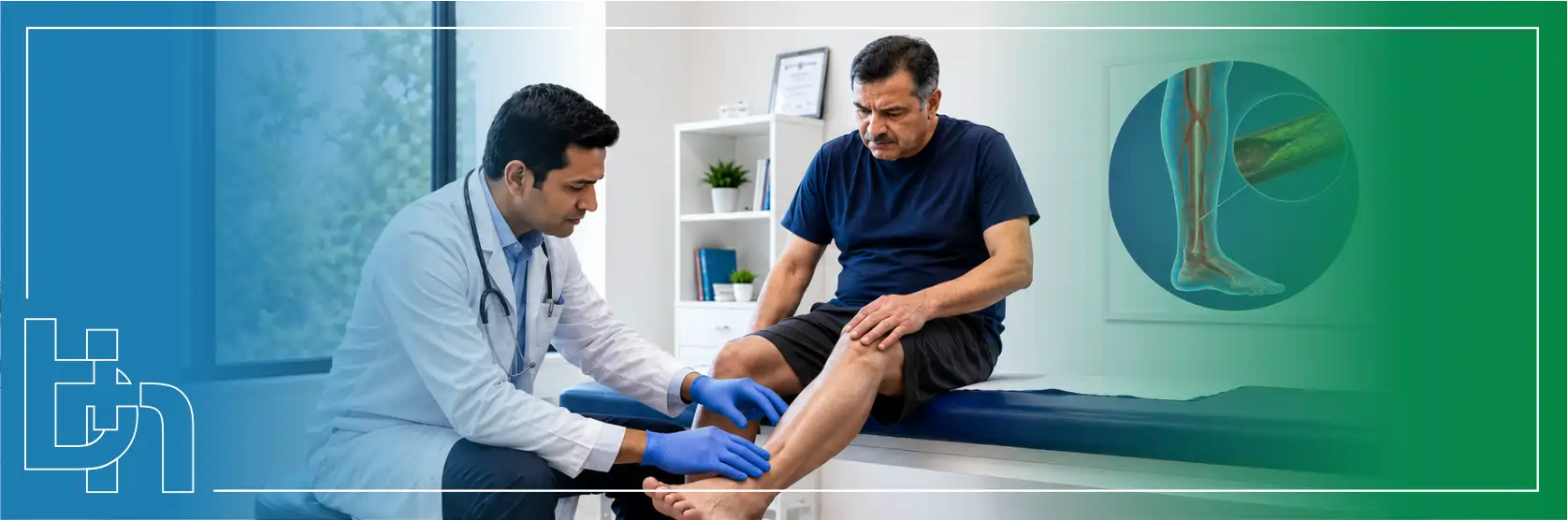
Peripheral Artery Disease, or PAD, sets in when the arteries carrying blood to your legs start narrowing because of fatty deposits building up along the walls. Less blood reaches the muscles, and the legs simply can't keep up with demand the way they used to.
It's far more widespread than people assume. Diabetics, smokers, and anyone with high blood pressure carry a much higher risk, yet many go undiagnosed for years because their symptoms are filed under "getting older."
Left unchecked, PAD doesn't stay confined to the legs. Reduced circulation can eventually affect wound healing across the body, and in severe, untreated cases, it raises the risk of tissue damage that's much harder to reverse. That's really the crux of why early detection matters so much here.
What Causes PAD to Develop
There isn't one single cause behind PAD. It usually builds up from a combination of habits and health conditions:
Recognizing the Warning Signs
The tell-tale sign is pain or cramping in the calf, thigh, or hip that shows up while walking and eases off with rest. Doctors call this "claudication." Some people also notice one foot feels colder than the other, or a small wound on the toe that just won't heal. Ignoring these for too long means eventually needing a vascular specialist near Mumbai for a condition that's advanced further than it needed to.
How PAD Is Treated
How PAD is treated depends on how far the blockage has progressed. If caught early, medication and lifestyle changes can be very effective — cholesterol-lowering drugs, blood thinners, and drugs that specifically help you walk further without pain. This is often where a structured blood circulation treatment in Mumbai plan begins, well before more invasive options are ever discussed.
When the blockage is more significant, angioplasty and stenting can open the artery back up without full surgery. In more severe cases, a bypass may be necessary to completely reroute blood flow around the blocked section.
The most effective leg pain treatment in Mumbai plans pair medical management with supervised walking programs. It sounds counterintuitive to walk more when walking hurts, but this kind of structured exercise genuinely helps blood vessels adapt and improve circulation over time.
Diagnosis and Care at Bhatia Hospital
The vascular team at Bhatia Hospital runs proper diagnostic testing ankle-brachial index measurements and Doppler ultrasound to catch PAD before it turns into something harder to manage. That early catch makes a real difference to outcomes.
Because PAD rarely shows up alone, vascular surgeons here look at patients alongside cardiologists and diabetologists when needed. Heart disease and diabetes tend to travel with PAD, so treating just the legs and ignoring the rest doesn't really work.
Everyday Habits That Help Manage PAD
After any procedure, stick to your medication schedule, avoid sitting or standing in one position for too long, and flag any new symptoms to your doctor right away rather than waiting for the next appointment.
Conclusion
PAD responds well to treatment when it's caught in time, but it needs to be caught, which means not writing off leg pain as normal ageing. If cramping, numbness, or slow-healing sores have become part of your routine, have the vascular team at Bhatia Hospital a trusted name for blood circulation treatment in Mumbai to check them out. A timely diagnosis now protects the mobility you'll want to rely on for decades.