
22 October 2026 | By Admin
When the rains pull back, many people in Mumbai start noticing a scratchy throat, a cough that will not go away, or a tight feeling in the chest. Air quality often slips in the post-monsoon months. Winds calm down, construction picks up again, and dust and vehicle fumes hang closer to the ground. For sensitive lungs this is a hard season, and knowing when to see a lung specialist in Mumbai spares you weeks of discomfort.
Why Mumbai's Air Turns Harsh After the Rains
During the monsoon, rain washes the air and keeps dust down. Once it stops, the picture changes. Construction dust rises again, traffic builds up, and lighter winds let pollutants settle instead of blowing away. The damp left behind also encourages mould and dust mites, and viral infections spread more easily as the weather shifts.
What Polluted Air Does Inside the Lungs
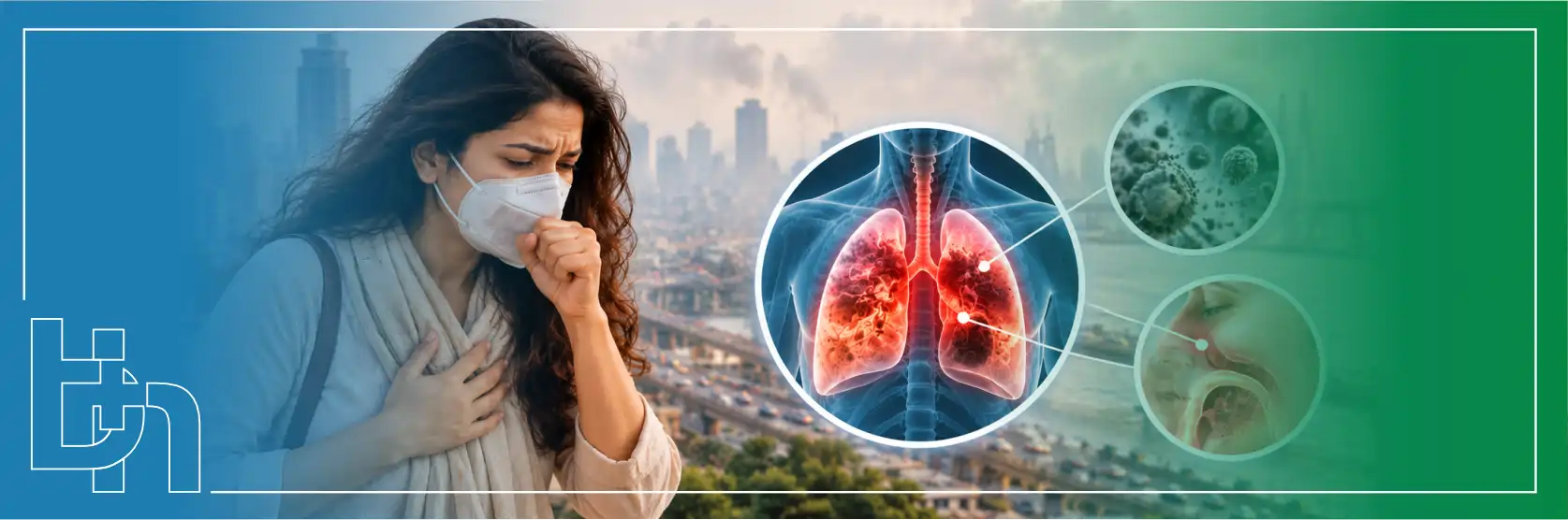
Fine particles, known as PM2.5 and PM10, along with gases such as nitrogen dioxide, get into the airways with every breath. The smallest particles travel deep into the lungs and can even reach the bloodstream. They irritate and inflame the lining of the airways, which triggers cough and wheeze in healthy people and pushes existing lung disease into a flare.
People Whose Lungs Are Most at Risk
Anyone can be affected, but some groups feel it sooner:
Symptoms That Point to a Lung Problem
A little throat irritation on a polluted day is common. The following deserve more attention:
Lung Tests and What They Measure
Diagnosis starts with your history: how long the symptoms have lasted, what sets them off, your job, and whether you smoke. The doctor listens to your chest and checks your oxygen level. Further tests may include:
Treatment for Pollution-Related Breathing Trouble
What you need depends on the cause. Common approaches include:
If you are trying to find the best chest medicine hospital in South Mumbai, look for lung function testing, imaging, and experienced chest physicians in one place. Our hospital has a Chest Medicine department. Air pollution lung treatment in Mumbai is mostly about controlling inflammation, managing triggers, and preventing flare-ups, and not just quieting the cough.
Deciding When a Cough Needs a Doctor
Many people ask, when should I see a doctor for breathing problems? Book a visit if breathlessness is new, getting worse, or limits your daily tasks. The same goes for a cough that runs beyond three weeks, wheezing that does not settle with your usual medicine, a rising need for your reliever inhaler, or fever with cough and breathlessness.
Go to the emergency room right away for severe breathlessness, blue or grey lips, chest pain, confusion, or coughing up blood.
Protecting Your Lungs Through the Season
You cannot clean the city's air, but you can cut your exposure:
Mild irritation and simple infections usually clear quickly once triggers are reduced. With chronic conditions, regular follow-up keeps symptoms in check.
Conclusion
Post-monsoon air can be hard on the lungs, and small symptoms are worth taking seriously. A cough that lingers, a wheeze, or breathlessness on ordinary days is your body asking for attention. If symptoms keep returning, see a chest specialist near me who can test your lungs, find the cause, and build a plan that helps you breathe easier through the season.
FAQs
1. Can pollution cause asthma in healthy people?
Long-term exposure is linked to a higher risk of developing asthma, especially in children.
2. Are cloth masks enough?
Ordinary cloth masks give limited protection against fine particles. Well-fitted N95-type masks work better.
3. Do air purifiers help?
They can lower indoor particle levels, but they work best alongside regular cleaning and sensible ventilation.
4. Is morning or evening better for exercise?
It depends on the day's air quality. Check the AQI, pick the cleanest time, or exercise indoors.
5. Can pollution affect the heart too?
Yes. Fine particles are linked to a higher risk of heart attack and stroke, especially in people who already have heart conditions.
6. Should children stay indoors on bad-air days?
Cutting back on strenuous outdoor play on high-pollution days is sensible, especially for children with asthma.
7. Does steam inhalation clear the lungs?
It may soothe a sore throat for a while, but it does not remove pollutants or treat lung disease. Symptoms that persist need medical assessment.