
22 September 2026 | By Admin
Introduction
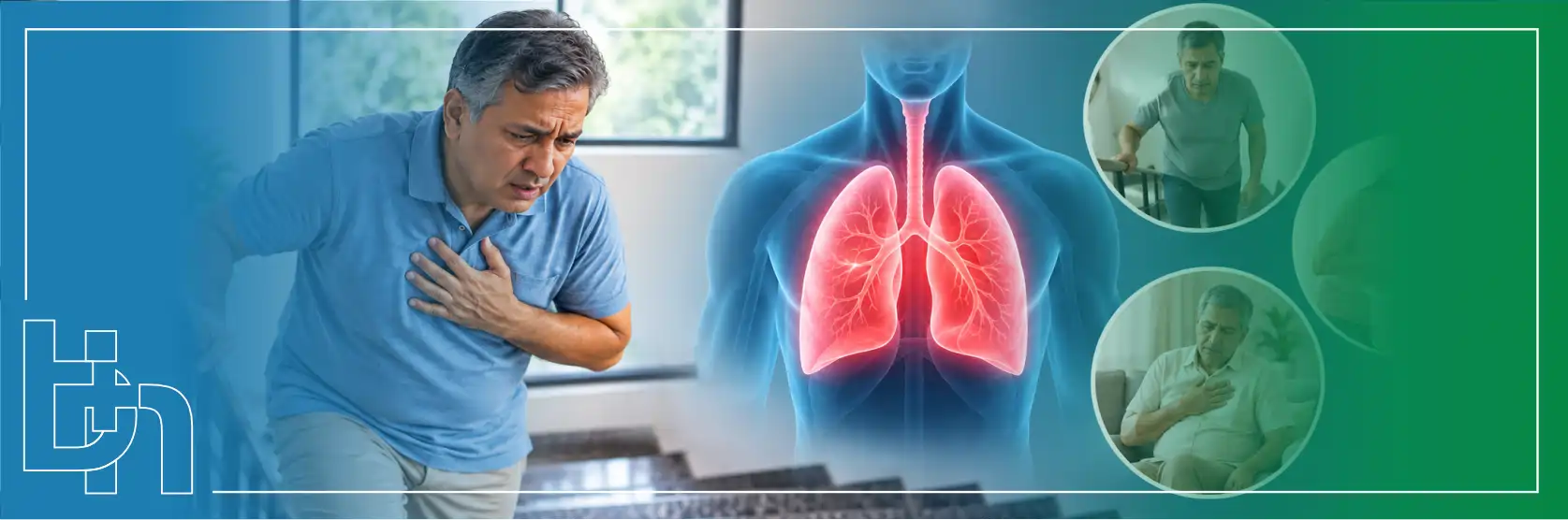
Getting winded after sprinting up several flights of stairs or pushing through a hard workout is completely normal. But breathlessness while walking at a moderate pace, climbing one flight of stairs, or doing something that used to feel effortless is a different story. When breathing becomes hard during routine, everyday activity, it usually signals that something in the respiratory or cardiovascular system needs a closer look. A pulmonologist in Mumbai is who you'd want to see once this starts happening as a pattern rather than a one-off.
Why Breathlessness During Routine Activity Is Different
Exertional breathlessness sits on a spectrum. On one end is the normal kind, which fades quickly once you stop moving and doesn't linger at rest. On the other end is the kind driven by an underlying disease, which shows up with less effort over time, can appear even at rest, and never quite resolves between episodes.
What makes this concerning is how gradual the change usually is. Something that caused no trouble six months ago suddenly leaves a person out of breath. Most people just adjust their habits around it instead of recognising it as a symptom, which is a big reason several serious conditions get diagnosed late.
Common Causes of Breathlessness During Everyday Activities
Asthma
Asthma triggers intermittent inflammation and narrowing of the airways, bringing on breathlessness along with wheezing, chest tightness, and a cough. Triggers differ from person to person, though cold air, exercise, dust, pollen, and respiratory infections are frequent culprits. Adult-onset asthma happens more often than assumed, and it's regularly missed when breathlessness shows up without the wheezing that usually tips doctors off.
Chronic Obstructive Pulmonary Disease
COPD covers chronic bronchitis and emphysema, involving airflow obstruction that's progressive and mostly irreversible. Long-term tobacco use is the most common cause, though occupational dust and chemical exposure can lead to it too. Breathlessness from COPD creeps up gradually over years before someone gets it checked, and by then a fair amount of lung function has often already been lost. Seeing the best chest physician in Mumbai as soon as breathlessness starts interfering with daily life gives the best shot at slowing things down.
Heart Failure
The heart and lungs are closely linked. Once the heart's pumping ability weakens, fluid builds up in the lungs, and breathing becomes a real effort. Breathlessness tied to heart failure typically worsens lying flat or overnight, often waking people up and forcing them to sit upright. Swelling in the ankles and legs tends to come along with it. This combination calls for urgent evaluation, since heart failure responds far better to early treatment than to care that comes later.
Pulmonary Embolism
A blood clot lodged in the pulmonary arteries can cause sudden, severe breathlessness, frequently paired with chest pain and a racing heart rate. This is a medical emergency, and it's one of the few causes of sudden breathlessness that should never be brushed off as anxiety or handled at home. Recent surgery, long periods of immobility, cancer, and a personal or family history of clotting disorders all raise the risk.
Anaemia
Low haemoglobin means the blood carries less oxygen per unit volume than it should. The body compensates by breathing faster and raising the heart rate during exertion, producing breathlessness that can feel out of proportion to the activity. Iron deficiency is the most common cause, though vitamin B12 deficiency and chronic disease can produce the same effect. A simple blood test settles the question.
Interstitial Lung Disease
This group of conditions, including pulmonary fibrosis, causes progressive scarring of lung tissue, bringing on gradually worsening breathlessness alongside a dry cough. It's often caught late simply because the breathlessness builds so slowly. It can follow exposure to certain occupational dusts, medications, or autoimmune conditions. A chest medicine hospital in Mumbai equipped with pulmonary function testing and high-resolution CT scanning is important for an accurate diagnosis here.
Warning Signs That Require Immediate Medical Attention
Any of these means emergency assessment comes first, ahead of a routine outpatient appointment. A lung specialist near me search is worth doing in the moment if symptoms point to something acute rather than something that's built up over weeks or months.
What the Evaluation Involves
A proper breathlessness workup starts with a detailed history — how it began, how it's progressed, other symptoms, smoking history, occupational exposures, and cardiac risk factors. The physical exam checks respiratory rate, oxygen saturation, and how the breath sounds through a stethoscope.
Investigations usually include a chest X-ray, pulmonary function tests to measure airflow and lung volume, an ECG and echocardiogram if a cardiac cause seems likely, blood tests for anaemia and inflammation, and a high-resolution CT scan when interstitial lung disease is a possibility. Together, these findings point toward which condition is responsible and which treatment path makes sense.
Conclusion
Breathlessness during everyday activities tends to go unreported until it's already limiting daily life, and by that point the underlying condition has usually been around for a while. Catching the pattern early and getting it properly evaluated, rather than adjusting your routine around it, leads to far better outcomes across most respiratory and cardiac conditions. If breathlessness during routine activities has started to stand out, a consultation with the best chest physician in Mumbai at Bhatia Hospital is the right place to start